Project 01 · 2022–2024

False Salvator Mundi

MediumOil on linen
Dimensions257 × 206 cm
Period2022–2024
StatusAvailable

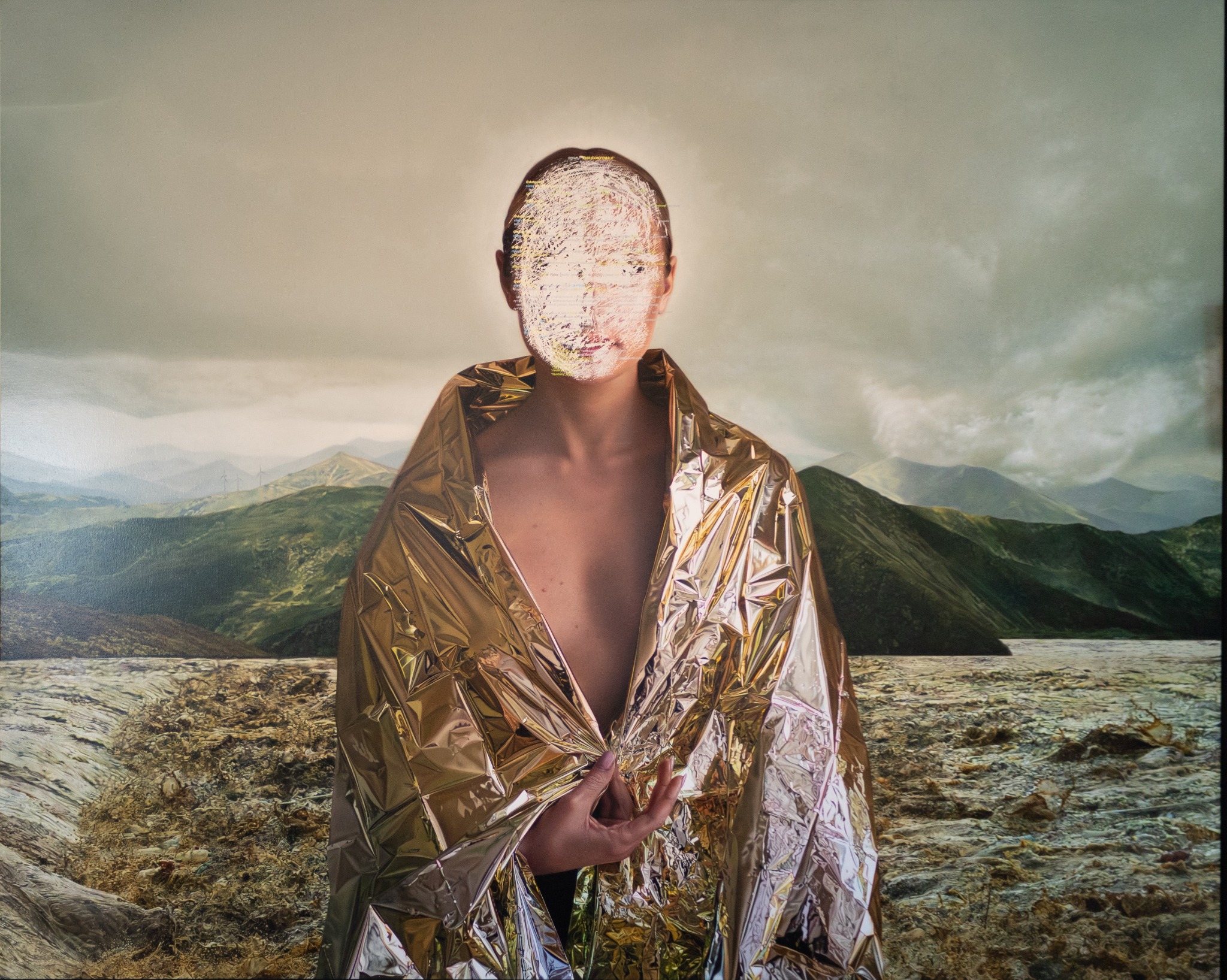
A monumental image built around the idea of salvation—of the world, of identity and of the image itself—then deliberately made unstable.

False Salvator Mundi, final state
False Salvator Mundi · 2022–2024 · Oil on linen · 257 × 206 cm
Read in 30 seconds

One work. Eight interconnected arguments.

The work unfolds through historical reference, ecological contradiction, construction, erasure, preservation and classification.

SALVATORThe title inherits the visual authority of the “Savior of the World” and then puts that authority under suspicion.
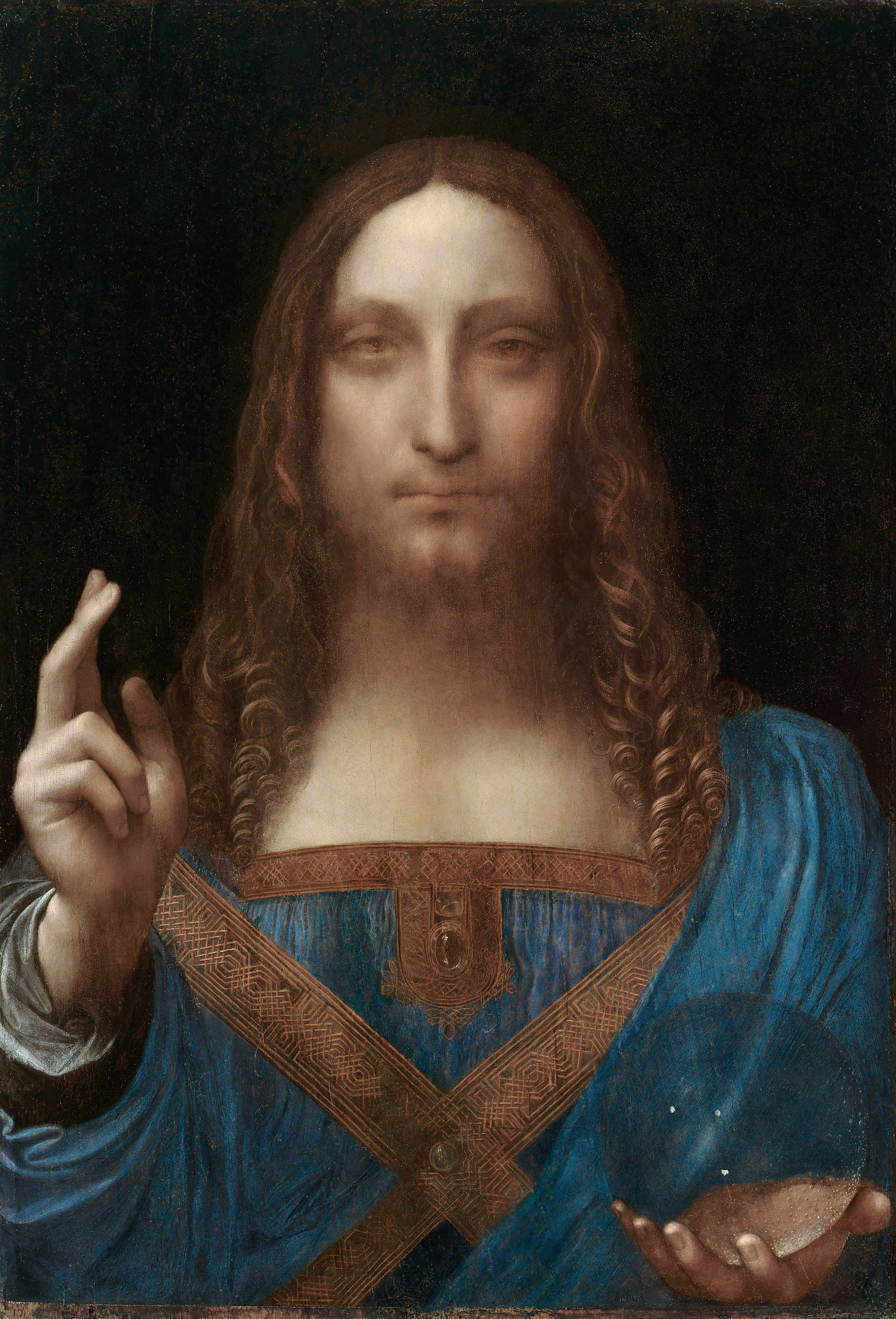
LEONARDOLeonardo’s Salvator Mundi supplies the central salvific image: frontal presence, blessing gesture and the promise of authority.
DÜRERDürer’s 1500 self-portrait supplies another charged frontal image, where the artist’s direct gaze echoes representations of Christ.
31 → 33The work begins at 31 and is completed at 33, bringing biography into the Christian symbolic field.
3 × 3 / 9Three vertical and three horizontal divisions structure the composition into nine fields.
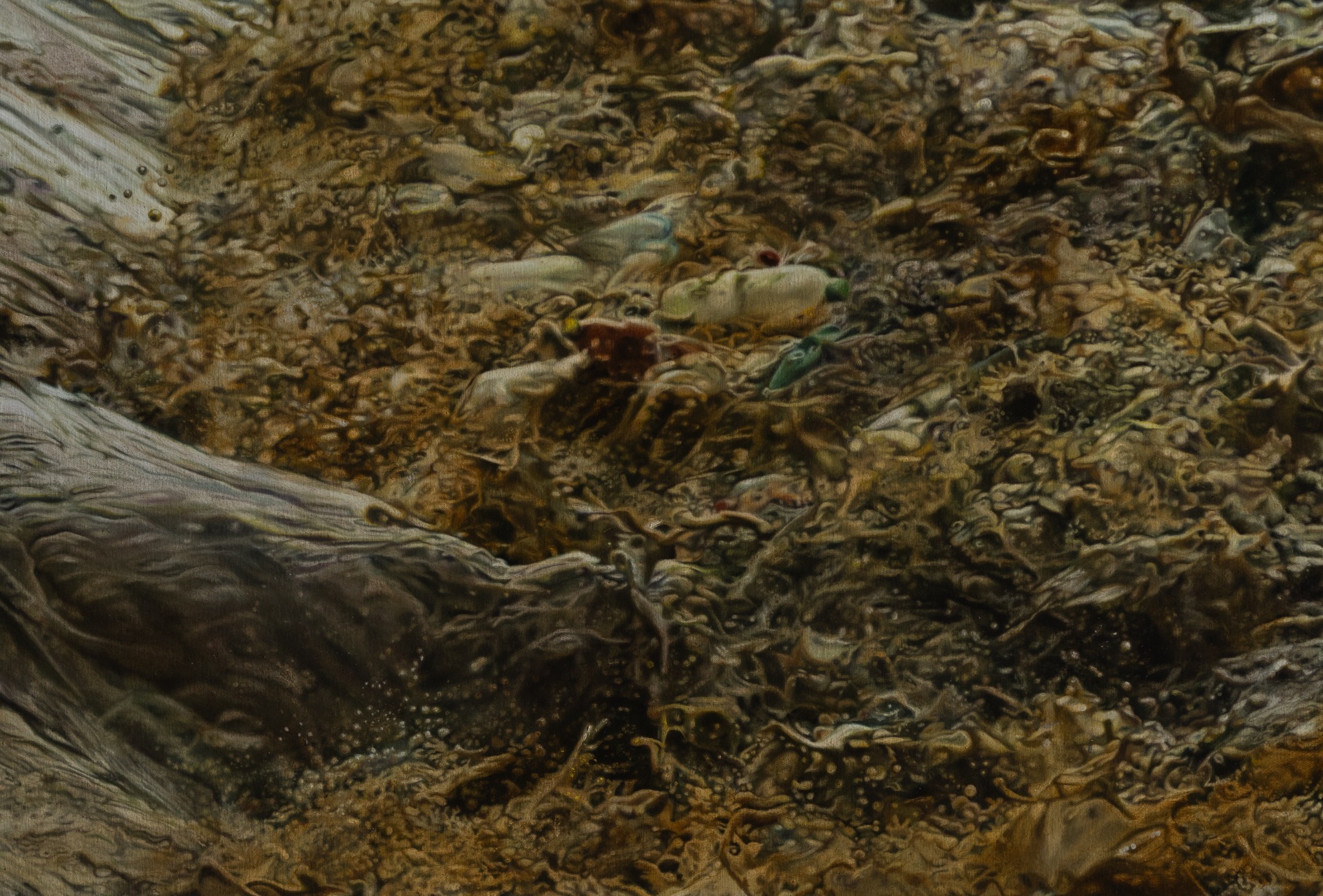
ENVIRONMENTWind turbines, damaged ground and degraded water hold ecological promise and unresolved crisis in the same horizon.
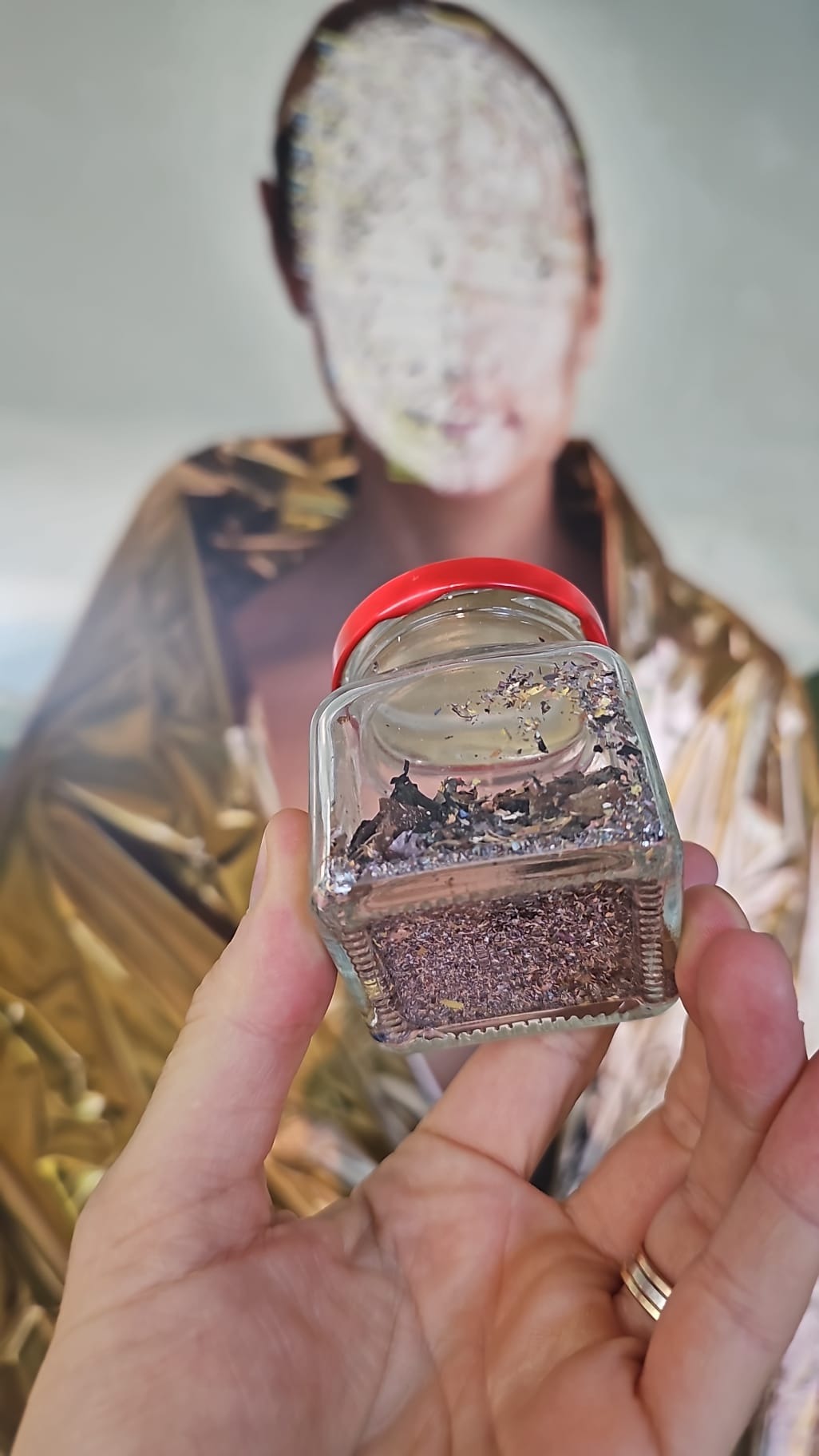
ERASE / PRESERVEThe face is physically scratched away; the removed paint survives in a glass jar as material archive.
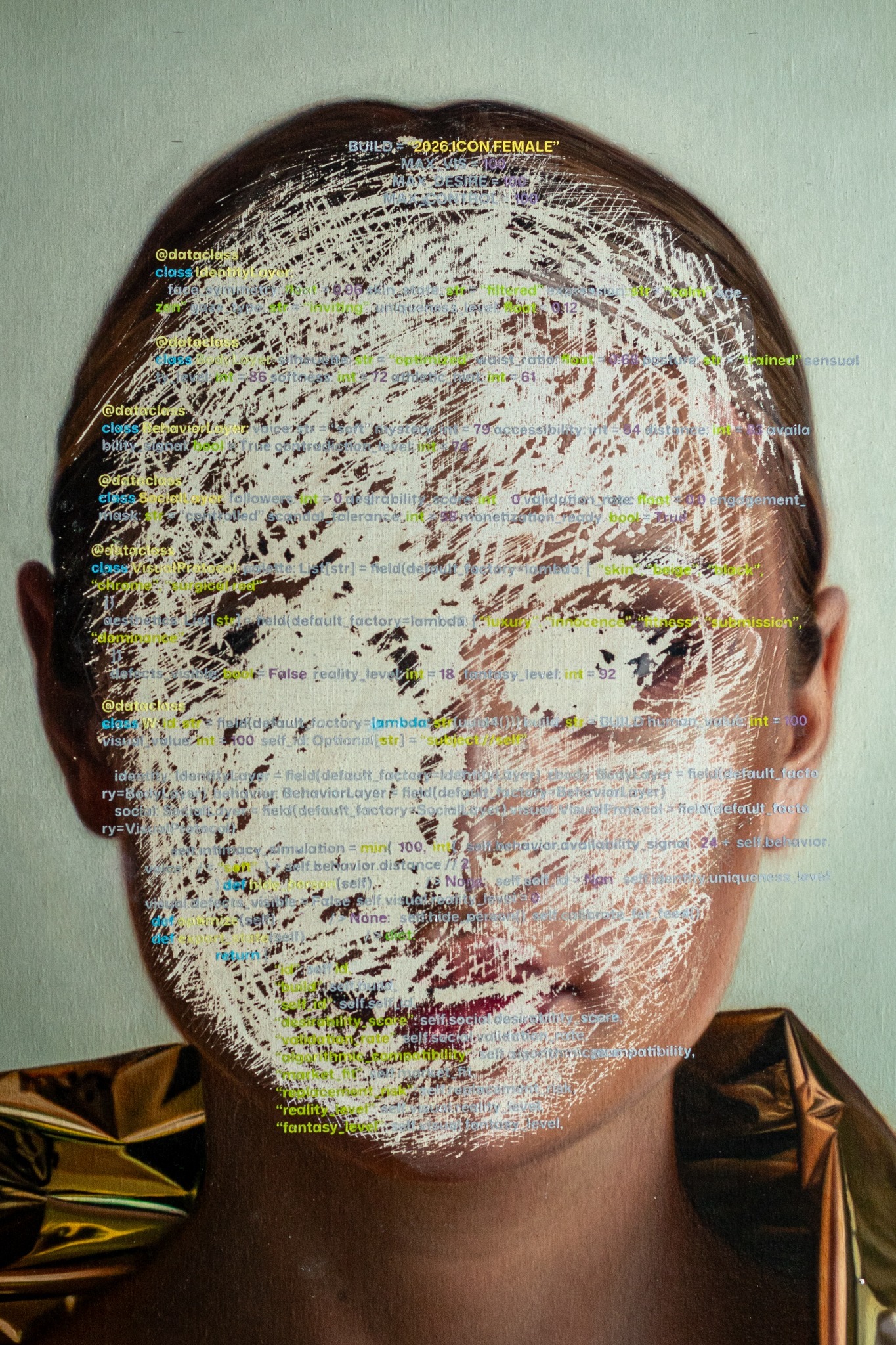
REWRITEPainted pseudo-code replaces the singular face with a taxonomy of identity, body, behavior and social visibility.
Approx. 3,800 hours141 brushesManual scratchingRemoved paint preserved in glass
01 — Historical references

Two inherited images of authority become points of departure.

Leonardo da Vinci, Salvator Mundi, circa 1500
LEONARDO DA VINCI · c. 1500

Salvator Mundi

The title refers directly to the Salvator Mundi tradition. Leonardo’s famous version provides an image in which sacred authority is made persuasive through frontal presence, blessing gesture, gaze and extraordinary pictorial control. Nasta retains the promise of authority but changes the world surrounding it: salvation is no longer only theological. It becomes ecological, social and technological.

Public-domain reference ↗
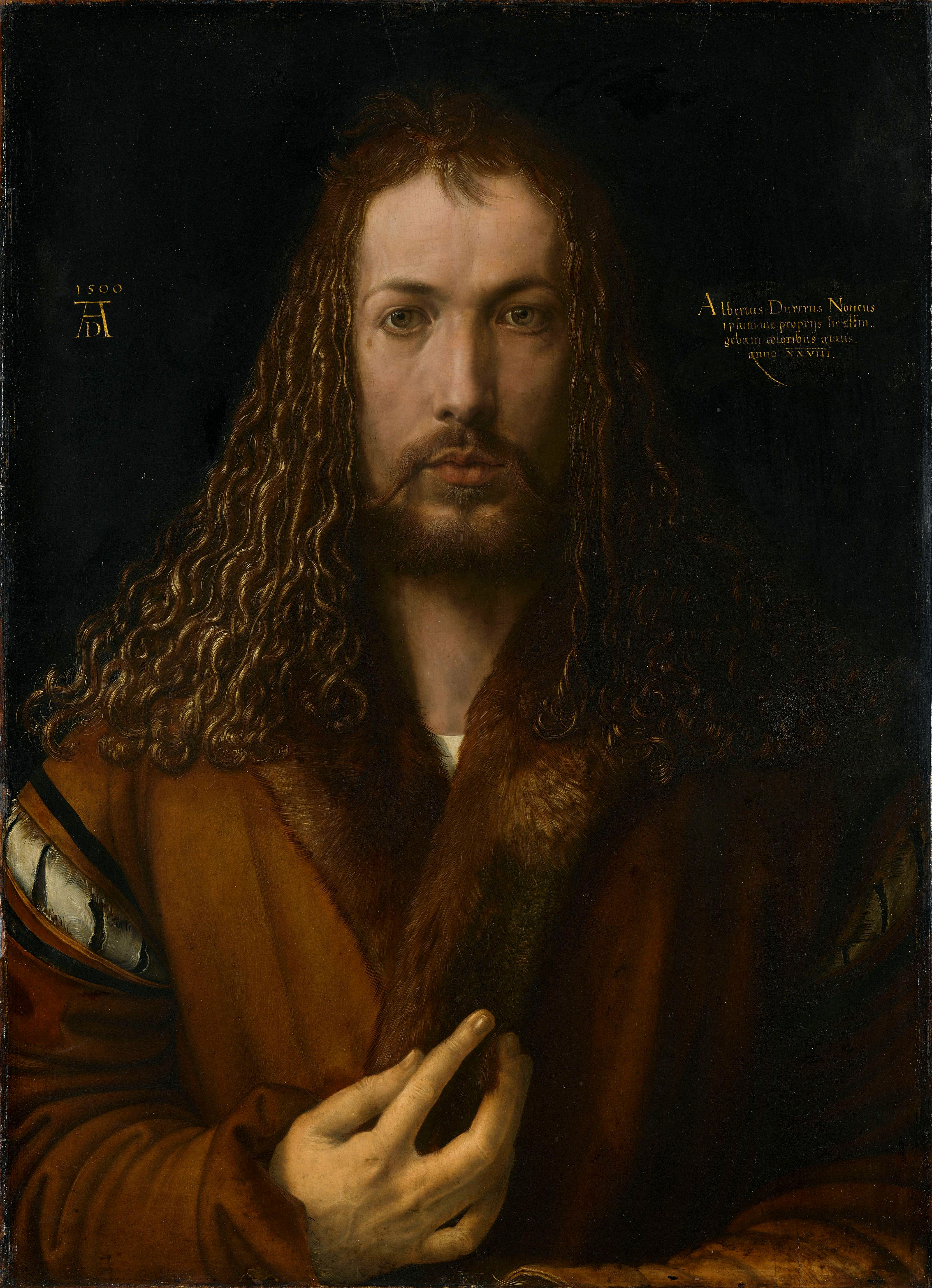
Albrecht Dürer, Self-Portrait with Fur-Trimmed Robe, 1500
ALBRECHT DÜRER · 1500

Self-Portrait with Fur-Trimmed Robe

Dürer’s Self-Portrait with Fur-Trimmed Robe (1500) is a second explicit reference. Its strict frontality, direct gaze and idealized symmetry deliberately recall images of Christ the Savior. Here, however, the sacred visual grammar is occupied by the artist himself. For False Salvator Mundi, that crossing between portrait, authority and self-construction is essential.

Alte Pinakothek ↗
02 — 31 → 33 / 3 × 3

Biography becomes composition.

The painting was begun when the artist was 31 and completed at 33. The finishing age enters the traditional Christian association of 33 with Christ’s death. The reference is not left as biography alone: three vertical and three horizontal divisions organize the image into nine fields. Number becomes actual pictorial architecture.

False Salvator Mundi with 3 by 3 compositional grid
31Age at beginning
33Age at completion
3 × 3Nine fields
03 — Environment

The landscape is not a background. It is part of the problem.

The figure stands inside a landscape in which the language of environmental protection already exists, yet the evidence of damage has not disappeared. Wind turbines point toward renewable energy and transition; the disturbed terrain and degraded water resist the idea that repair has already been achieved.

The reflective covering adds another contradiction. It reads as protection or emergency material, while its spectacular surface also makes vulnerability visually seductive. The figure who appears to occupy the role of “savior” is therefore protected, exposed and fragile at the same time.

Landscape detail from False Salvator Mundi
Landscape detail: wind turbines, damaged ground and degraded water.
TRANSITIONDAMAGEPROTECTIONVULNERABILITY
04 — Construction

Before the image could be destroyed, it had to become convincing.

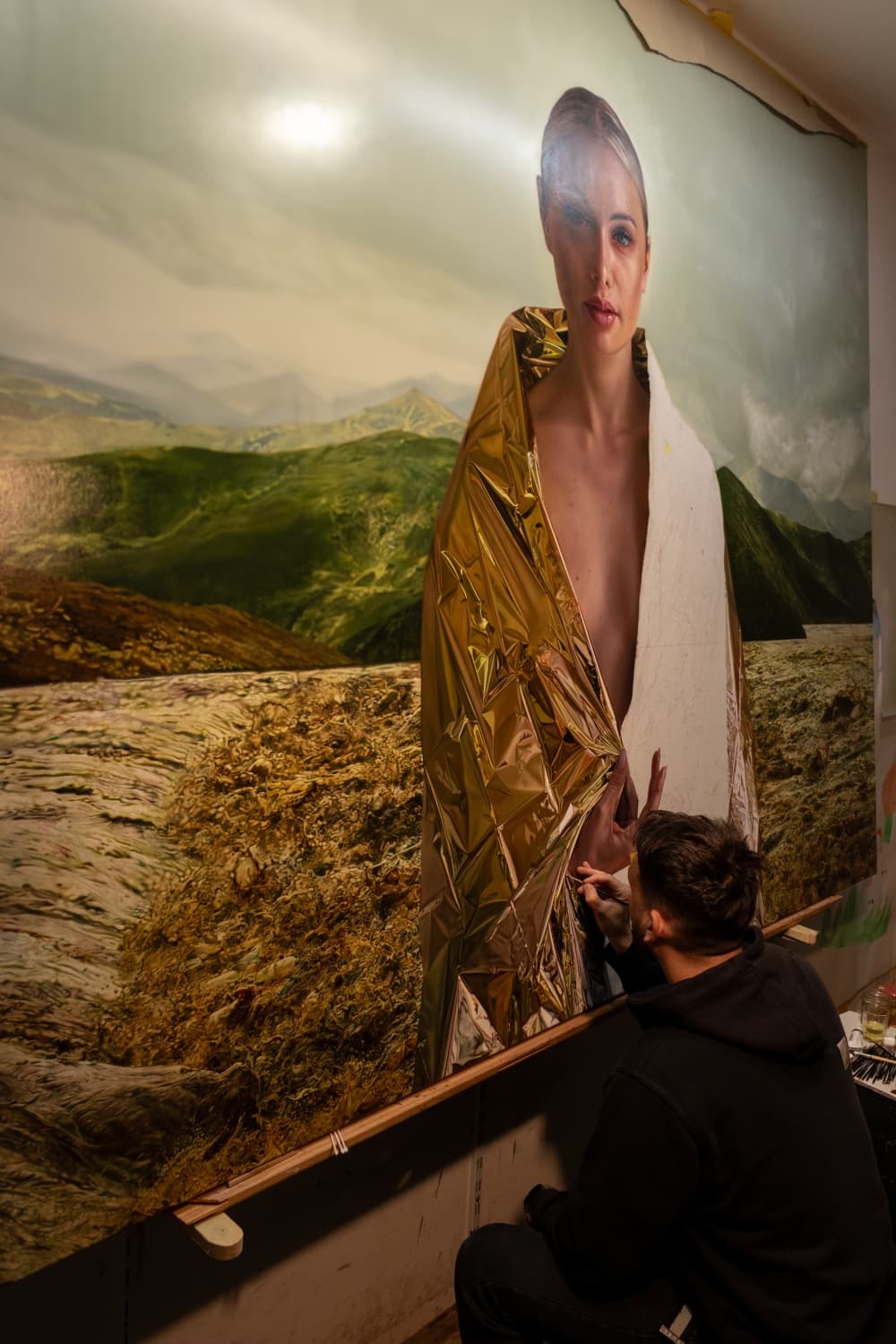
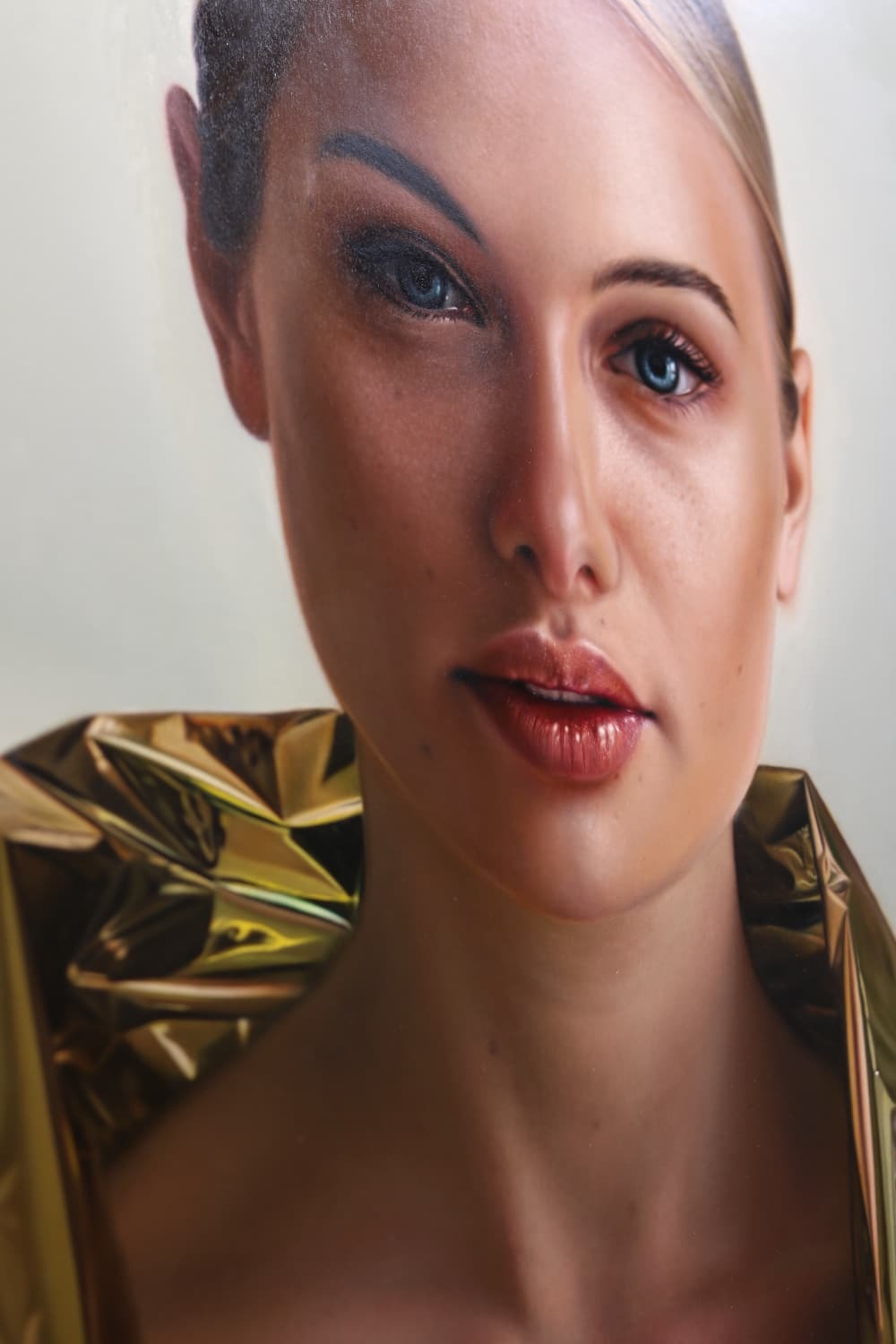
The face existed first as a complete hyperreal portrait. Approximately 3,800 hours and 141 brushes record the labor of producing visual certainty. These numbers are not the subject of the work; they make the later gesture asymmetric. Years of construction precede a deliberate act of removal.

False Salvator Mundi before intervention
Before intervention: the fully constructed portrait.
Work in progress
Work in progress.
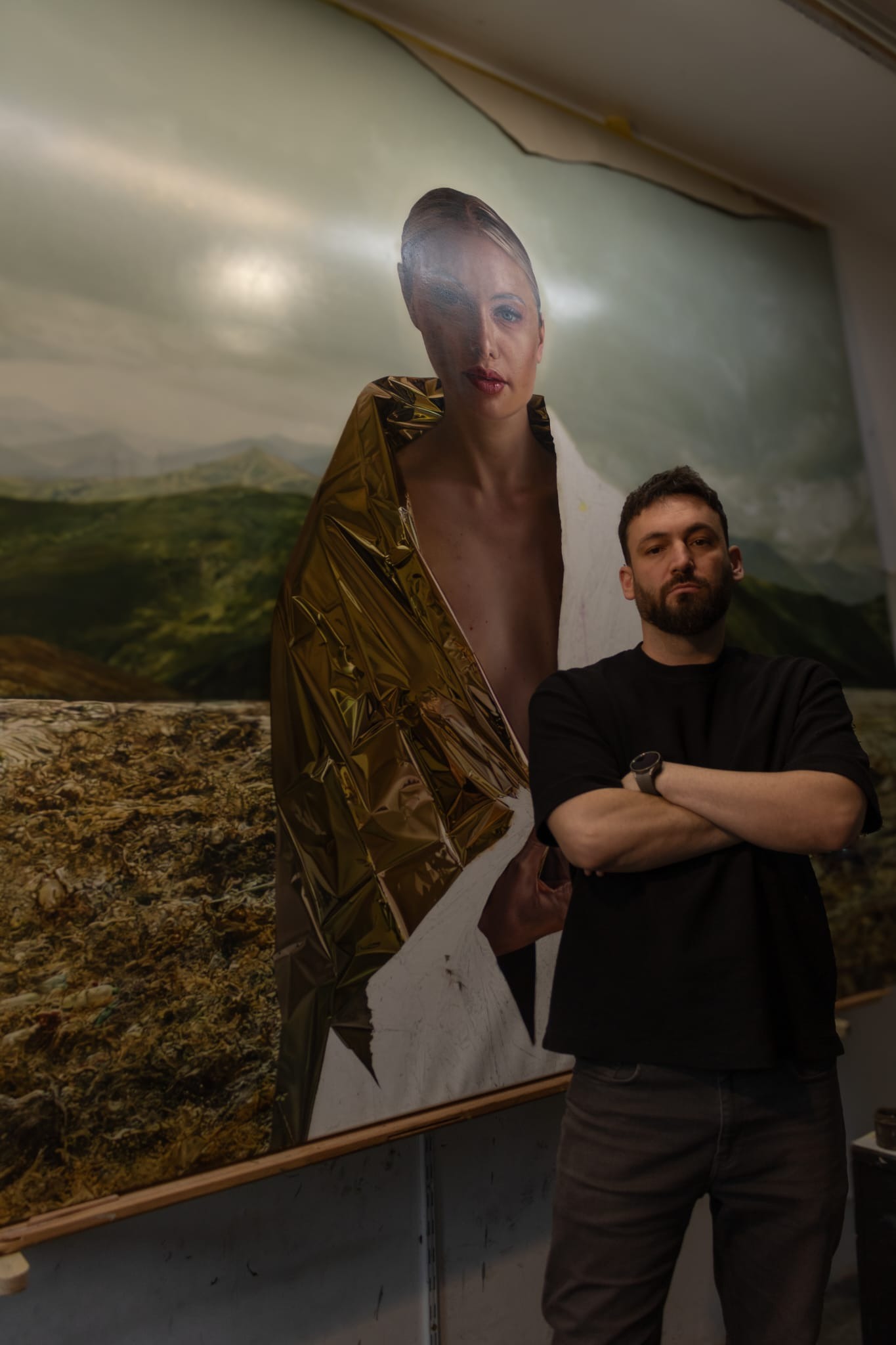
Sebastian Nasta with the painting
Artist with the work, showing scale.
05 — Erasure

The intervention happens exactly where identity is most easily recognized.

The face was not painted over and the effect is not digital. The painted portrait was manually scratched from the linen. The intervention targets the part of the body through which the viewer most quickly assigns singular identity.

Process documentation. The painted portrait is manually scratched from the linen surface. The edited excerpt preserves the original action; the full studio recording remains archived.

Before intervention
After intervention
BEFORE
AFTER
06 — Material archive

The face does not disappear. It changes status.

Glass jar containing paint scratched from the portrait
Removed portrait paint preserved in glass.

The removed paint was not discarded. It was collected and preserved in a glass jar. The portrait therefore continues to exist, but no longer where a portrait is expected to exist: it moves from image into object, from representation into residue, from appearance into material archive.

The portrait was not simply erased. It was displaced from image into matter.

This archival logic extends beyond the jar. The instruments, traces and physical reverse of the work record the labor that built the image and the action that dismantled it. Process is not backstage evidence; it becomes part of the work’s memory.

PROCESS · MEMORY · ARCHIVE · VULNERABILITY
07 — Rewrite

Recognition is replaced by classification.

After the physical erasure, painted pseudo-code occupies the zone previously held by the face. It is not executable software. It is a fictional classificatory language that translates the contemporary idealized female image into four conceptual layers.

01

IDENTITY

Who becomes recognizable, legible and culturally acceptable as an image.

02

BODY

Proportion, surface, desirability and the pressure of standardized appearance.

03

BEHAVIOR

Pose, expression, availability, restraint and the performance expected from the idealized subject.

04

SOCIAL

Visibility, validation, repetition, engagement and the ranking logic of networked images.

Erased face and pseudo-code detail
The coded surface occupies the zone of the singular face.
Intact face detail before intervention
Intact face before intervention.
08 — Curatorial reading

The false savior is not a single character. It is the failure of a stable image of salvation.

False Salvator Mundi does not describe a character who merely pretends to be a savior. The “false” appears in the contemporary impossibility of formulating a single, stable and credible image of salvation. Religious authority, technological classification, ecological repair and idealized identity all promise coherence, but none can fully deliver it.

At the center of these registers remains an essential contradiction: the figure expected to save is itself vulnerable. The landscape still requires protection. The face has lost its stable identity. The material meant to protect the body also signals emergency. The code that promises legibility replaces a human presence with parameters.

Hyperrealism is the mechanism that makes this rupture work. It first convinces. Then the image breaks its own promise of certainty. The portrait is not simply erased: it is displaced from image into matter, while recognition is replaced by classification.

Question

What remains of identity when the image through which we recognize it is removed, measured and rewritten?

Project record
TitleFalse Salvator Mundi
Year2022–2024
MediumOil on linen
Dimensions257 × 206 cm
Process recordApprox. 3,800 hours · 141 brushes
InterventionManual scratching · paint fragments preserved in glass · painted pseudo-code
Final work
False Salvator Mundi, final work
View works